2026 Media Partnership



| M | T | W | T | F | S | S |
|---|---|---|---|---|---|---|
| 1 | 2 | 3 | 4 | 5 | 6 | 7 |
| 8 | 9 | 10 | 11 | 12 | 13 | 14 |
| 15 | 16 | 17 | 18 | 19 | 20 | 21 |
| 22 | 23 | 24 | 25 | 26 | 27 | 28 |
| 29 | 30 | |||||
RENEWABLE CHEMICAL EVENTS 2026
- Jun 10-11, BIO Innovations Europe, Hague, the Netherlands
- Jul 22-24, 23rd Global Oleochem Summit 2026, Kunming, China
- Sep 9-10, BIO Innovations North America, Omaha, Nebraska, USA
- Sep 22-24, Renewable Materials Conference, Siegburg/Cologne, Germany
- Oct 1-2, 5th ICIS Pan American Oleochemicals Conference, Miami, USA
- Nov 1-3, 6th Annual 2026 AFCC Global Biobased Economy Conference & Exhibit, Washington D.C., USA
- Nov 17-18, Advanced Recycling Conference, Cologne, Germany
Latest Post
-

Biopolymers Market Update
The bio-based polymers market is not immune by the challenges plaguing the global plastics supply chain. The market is being tested by profitability, feedstock economics, downstream adoption and the ability of producers to scale without overbuilding ahead of demand. Polybutylene succinate (PBS) is the clearest example. Mitsubishi Chemical’s withdrawal from the PTTMCC Biochem BioPBS™ business in Thailand removes one of the most visible commercial bio-based PBS platforms from the global market. Production ended in December 2025, with sales to continue only until remaining stocks are exhausted. PBS activities in China continues through a mix of bio-based and coal-based PBS projects…
-

Key Quotes from the 16th ICIS World Surfactants Conference
Diversification, cost pressures and innovation are key topics discussed at the recently-held 16th ICIS World Surfactants Conference in Jersey City, New Jersey. We highlighted several quotes from various speakers and panelists gathered on this event. DAY 1 Speaker: Robert Fry, PhD, Economist: “Europe and Asia face greater recession risks than the USA because of their higher exposure to energy imports, while North Americas natural gas advantage continues to support its chemical industry competitiveness relative to regions dependent on naphtha-based feedstocks.” Panel Discussion: The panel focused on how Middle East supply disruption is affecting petrochemical and renewable chemical supply chains. “US…
-
Global Furanics Market Development Splits Across the USA, Europe and China
The furanics market is moving in different directions with current activity shows a US retrenchment around Origin Materials, continued European commercialization through Avantium and ResiCare, and expanding Chinese activity around furandicarboxylic acid (FDCA), polyethylene furanoate (PEF) and other furan-based polymer applications. Origin Materials has moved toward liquidation after scaling back its biomass-to-chemicals platform and later announcing plans to sell its PET cap technology and remaining assets, followed by a wind-down of its operations. Origin had previously promoted a furanics platform based on converting lignocellulosic feedstock into chloromethyl furfural (CMF), for potential downstream use in PET precursor paraxylene, FDCA and PEF.…
-
China’s 15th Five-Year Plan Raises the Stakes in Biomanufacturing
Biomanufacturing is moving deeper into China’s industrial policy base as indicated in the country’s recently-released 15th Five-Year Plan. The national 2026-2030 plan identifies biomanufacturing and advanced materials as priority areas for technological breakthroughs and industrial upgrading. China’s Ministry of Industry and Information Technology (MIIT) is also expected to issue a dedicated 15th Five-Year Biomanufacturing Development Plan, with public reports pointing to landmark products, AI application cases, pilot platforms, and high-performance bioreactors as key areas of focus. The plan aims to transform China’s biotech industry from R&D into a dominant global producer through enhanced manufacturing capabilities. Key focus industries will include…
-
Chemical Supply Chains Under Pressure: Managing Middle East Disruption With Renewable Options
The latest escalation in the Middle East is reintroducing two familiar fragilities into the chemical value chain: energy-price volatility and logistics risk concentration. Markets are explicitly pricing the possibility of supply disruption tied to Gulf geopolitics (including the Strait of Hormuz), with upstream crude moving on risk premiums and producers/consumers facing faster, less predictable feedstock cost swings such as naphtha, LPG, aromatics, etc., that flow directly into petrochemical margins and contract pricing. The Strait of Hormuz is critical to the petrochemical industry because it acts as the primary maritime bottleneck for roughly 20-25% of global oil and liquified natural gas…
-
Green Chemicals Blog Newsletter on LinkedIn
Green D Market Analytics LLC has introduced the Green Chemicals Blog Newsletter on LinkedIn —an alternative channel for staying current on renewable chemicals markets and companies. The Green Chemicals Blog has operated since 2007 and has served as an independent source of news and short market analysis of the renewable chemicals industry. Throughout 2026, we will gradually transition the Green Chemicals Blog to a new home under the Green D Market Analytics umbrella. This shift is intended to consolidate and organized the delivery of our content while keeping the same focus: credible, industry-relevant coverage of the renewable chemicals and materials value chain.…
-
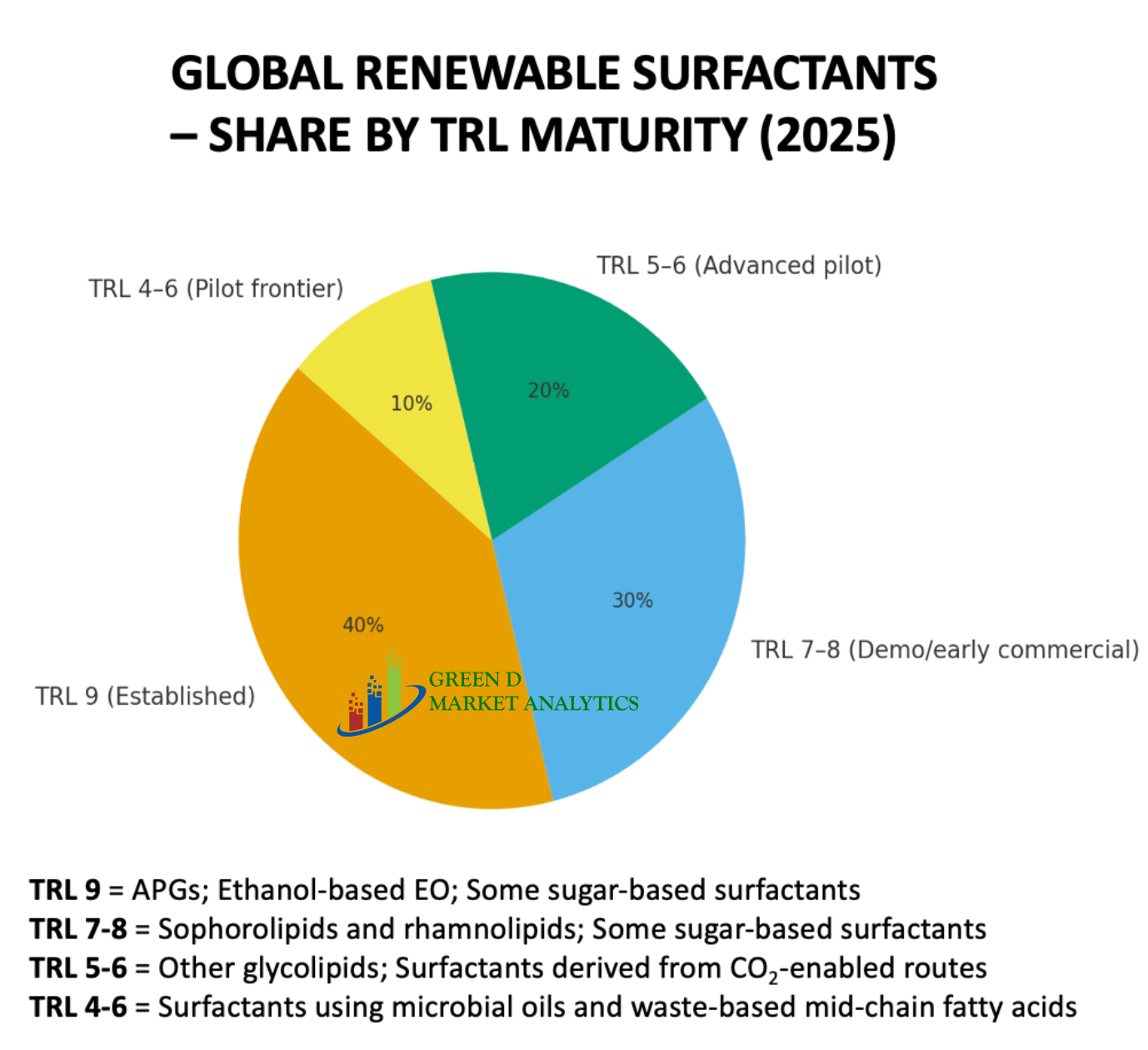
New Market Report: “Detailed Assessment of the Renewable Surfactants Market”
Developed in collaboration with Neil A Burns LLC, Green D Market Analytics (GDMA) today announced the publication of a new market report, “Detailed Assessment of the Renewable Surfactants Market,” which will be available beginning January 12, 2026.
-

Geno, Sojitz bio-nylon partnership
Geno’s recent announcement of a partnership with Sojitz strengthens the company’s push to commercialize 100 % plant-based nylon-6. According to the press release, Sojitz will provide strategic investment and market access support to accelerate the transition from demonstration to commercial scale. Geno describes its technology as a drop-in replacement for conventional nylon-6, utilizing renewable carbon derived from sugars to produce caprolactam intermediates, which are then used to make nylon-6. The companies plan to form a separate entity for the deployment of a flagship commercial plant. The technical route Geno employs is a fermentation-based manufacturing platform: plant sugars are fermented into…
-
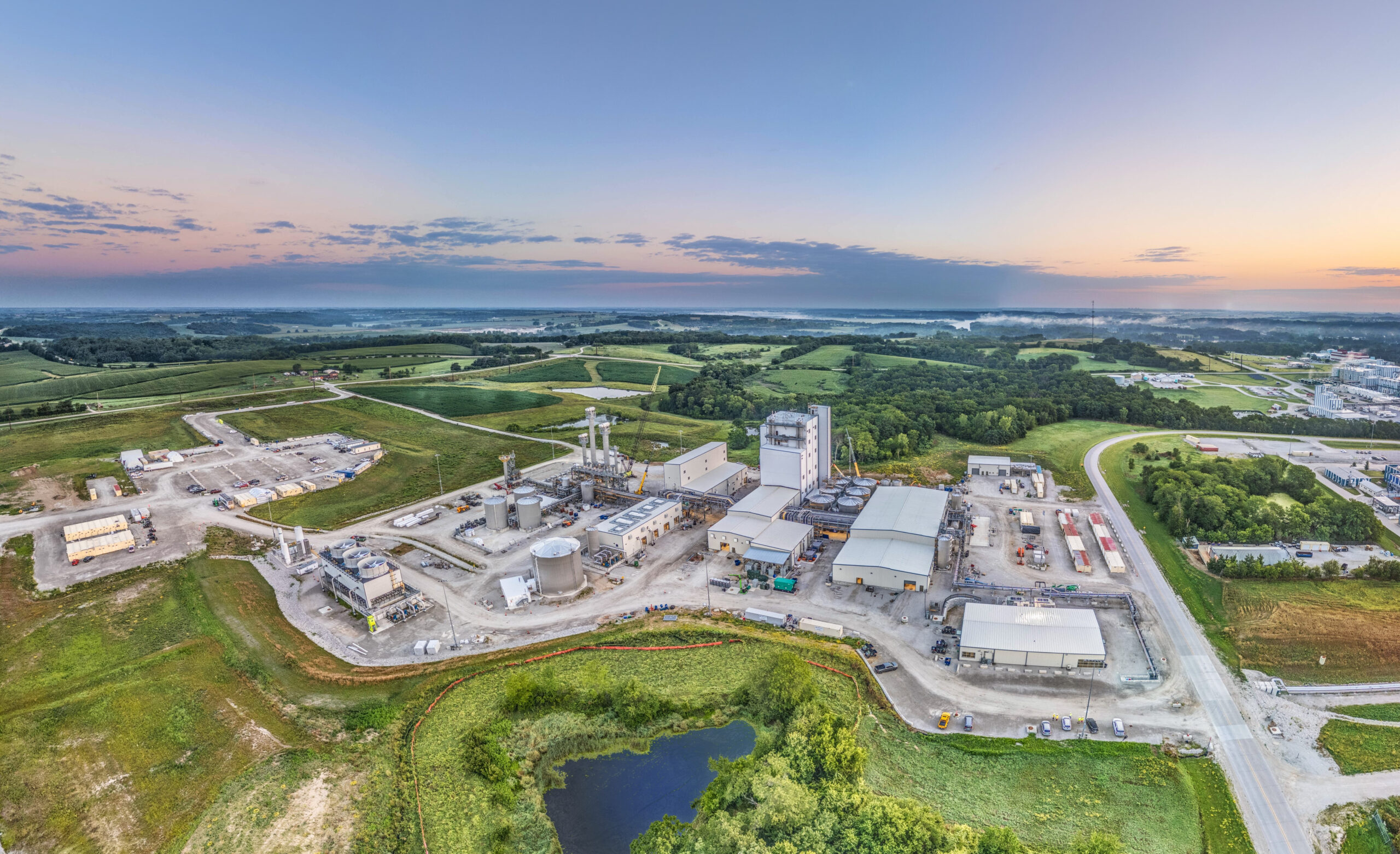
Qore starts bio-BDO operations
Qore, a joint venture between Cargill and HELM, has officially commenced commercial-scale production of bio-derived 1,4‑butanediol (BDO), branded as QIRA®, at its new Eddyville, Iowa facility. The plant cost $300 million and has an annual capacity of 66,000 metric tons, sourcing dent corn grown within a 100-mile radius. This marks a significant entry into the bio-BDO space, though it still represents a small fraction of total BDO capacity. Qore’s facility utilizes Geno’s fermentation technology. Qore’s partnerships include BASF, which secured long-term access to QIRA’s’s Iowa production, while the LYCRA Company is integrating QIRA® into its EcoMade spandex fiber. Qore’s entrance…
-

Nufarm Acquires Yield10 Assets, Closing Chapter on Former PHA Pioneer Metabolix
Australia-based Nufarm Limited’s seed-technology arm has recently closed the acquisition of substantially all of Yield10 Bioscience’s assets, completing a transaction first outlined in mid-2024. The deal, finalized in January 2025, transfers Yield10’s entire camelina R&D portfolio—including omega-3, herbicide tolerance, and bio-energy traits—for a consideration of up to USD $5 million, as set out in the October 2024 asset-purchase agreement. The divestment caps a severe financial unwind at Yield10. The company was forced off Nasdaq in May 2024 for failing to meet the $2.5 million minimum equity requirement, and its shares have been trading over the counter since the suspension. Liquidity…
-

Teknor Apex acquires Danimer
Teknor Apex Company, a global custom compounder of plastics and elastomers, has acquired the assets of Danimer Scientific, a developer and manufacturer of biodegradable polymer technologies, through a bankruptcy auction process. The acquisition was finalized following a court-approved sale under Chapter 11 proceedings in May 2025. Headquartered in Bainbridge, Georgia, Danimer Scientific filed for Chapter 11 bankruptcy protection in March 2025, amid ongoing financial challenges. Teknor Apex was designated as the stalking horse bidder and, in the absence of competing qualified offers for substantially all of Danimer’s assets, was selected as the winning bidder. The $19 million acquisition includes Danimer’s…
-
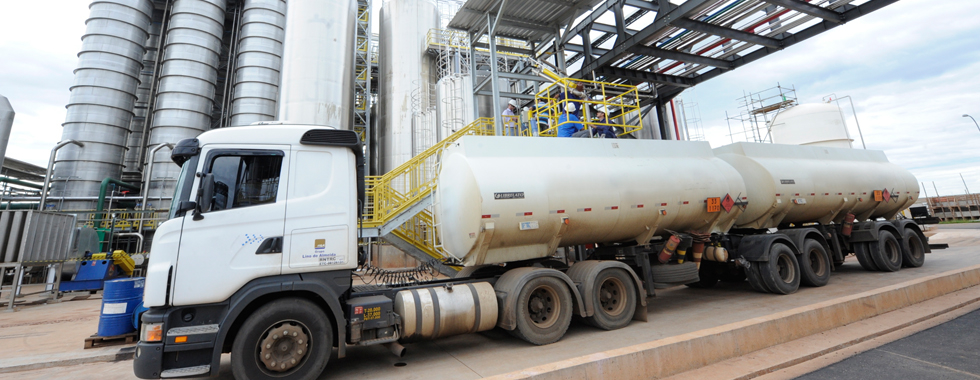
Amyris rebuilds Post-Bankruptcy
Following a year of emerging from Chapter 11 bankruptcy, Amyris is seeking to regain its footing with a renewed focus on its core competencies in sustainable ingredient manufacturing. Last month, Amyris announced that it had acquired full ownership of its precision fermentation plant in Barra Bonita, Brazil, by purchasing Ingredion’s 31% stake in their RealSweet joint venture. The JV was established in 2021 to develop and commercialize fermentation-derived Rebaudioside M (Reb M), a high-purity steviol glycoside known for its sugar-like taste and zero-calorie profile. Reb M is produced in Barra Bonita using Amyris’s precision fermentation technology. This dissolution of the…
-

American Alliance for Biomanufacturing
A coalition of industry leaders has inaugurated the American Alliance for Biomanufacturing (AAB) to fortify the United States’ position in the global bioeconomy. This alliance aims to enhance U.S. capabilities in scalable, secure biomanufacturing, addressing critical challenges and opportunities in a sector increasingly vital to national economic and security interests. The AAB’s formation responds to calls from the National Security Commission on Emerging Biotechnology (NSCEB) for a coordinated national strategy to ensure U.S. leadership in industrial biomanufacturing. Biomanufacturing – which utilizes biological systems to manufacture products spanning sectors as diverse as energy, defense, agriculture, chemicals, ingredients, sweeteners, materials, fabrics, and…
-

2025 World Surfactants Conference Coverage
The phrase “I don’t know” was a central theme emphasized during the opening remarks at the recently held World Surfactants Conference in Jersey City, New Jersey, USA. The two-day event centered on the heightened uncertainty and potential disruption in the chemical supply chain driven by US tariffs and other trade policies, while also highlighting a growing sense of optimism regarding sustainability-driven innovation within the surfactants industry. Green D Market Analytics founder and principal Doris de Guzman moderated the Biosurfactant Panel Discussion. The presenters included Dennis Zlotnik, founder of BioReNuva; Christoph Krumm, Co-Founder and CEO of Sironix Renewables; and Michael Fielding, Chief Executive and…
-

US Biotech and National Security
The National Security Commission on Emerging Biotechnology (NSCEB) has released a pivotal report highlighting the strategic importance of biotechnology to U.S. national security and expressing concern over China’s rapid advancements in this sector. The report underscores that the United States, historically a leader in biotechnology, is now at risk of falling behind in critical areas as China surges ahead. China’s strategic focus on biotechnology over the past two decades has led to significant advancements, including the adoption of technologies like CRISPR and progress in cell therapy. Green D Market Analytics has been chronicling the surge of industrial biotechnology capacity in…
-
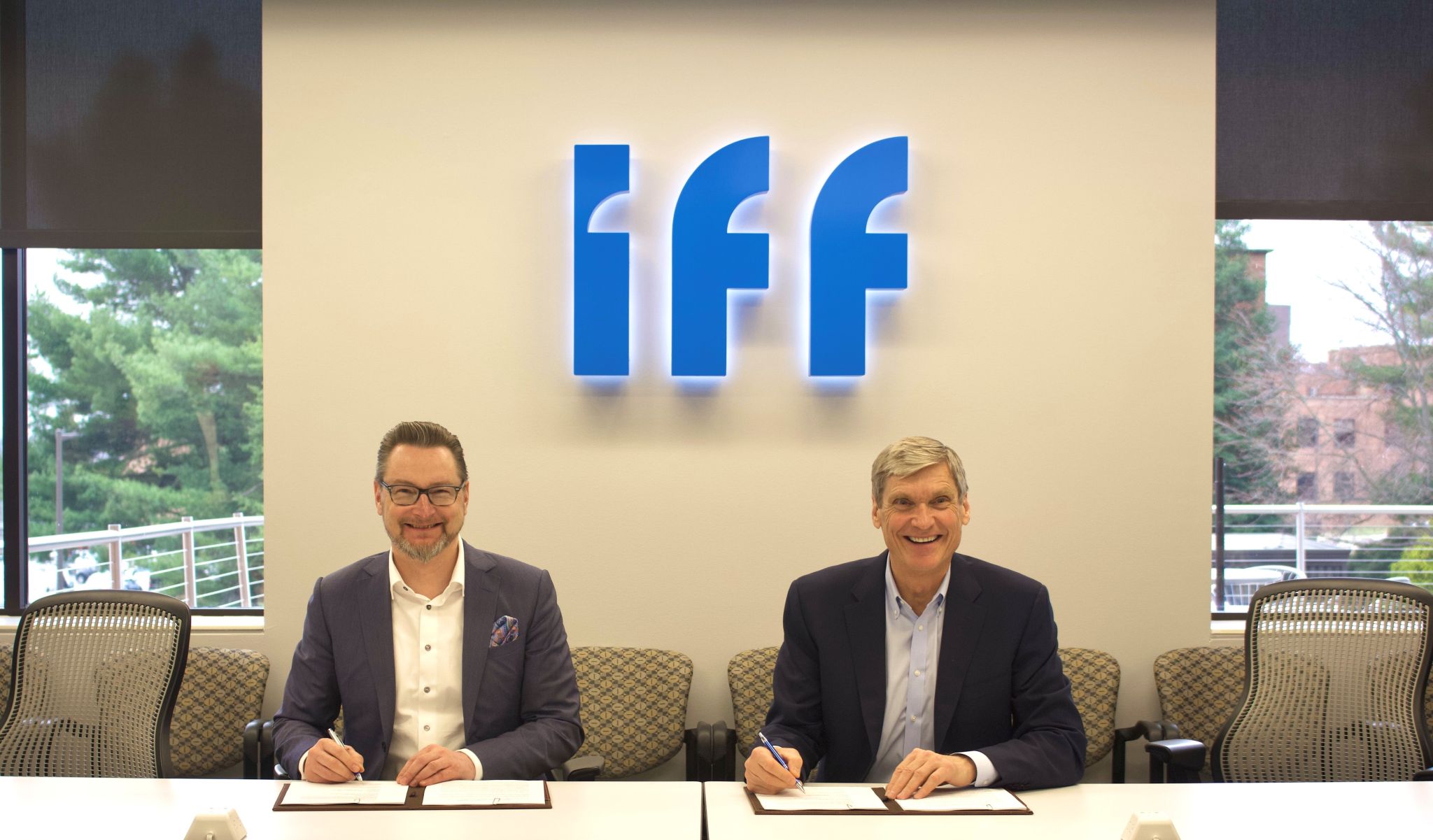
IFF and Kemira launch AlphaBio JV
IFF and specialty chemicals company Kemira launched Alpha Bio, a joint venture aimed at commercial-scale production of renewable bio-based materials with an investment value of €130 million. The Alpha Bio facility, to be located at the IFF biorefinery in Kotka, Finland, will convert up to 44,000 tons of plant sugars to various products, including high-performance biopolymers for use in various applications, such as home and personal care and industrial solutions. The facility will start production in late 2027. Alpha Bio’s process will use IFF’s Designed Enzymatic Biomaterial™ (DEB) platform technology, which enables the production of bio-based materials using plant-based sugars and…
-
Status and Outlook: Bio-based Polymers worldwide
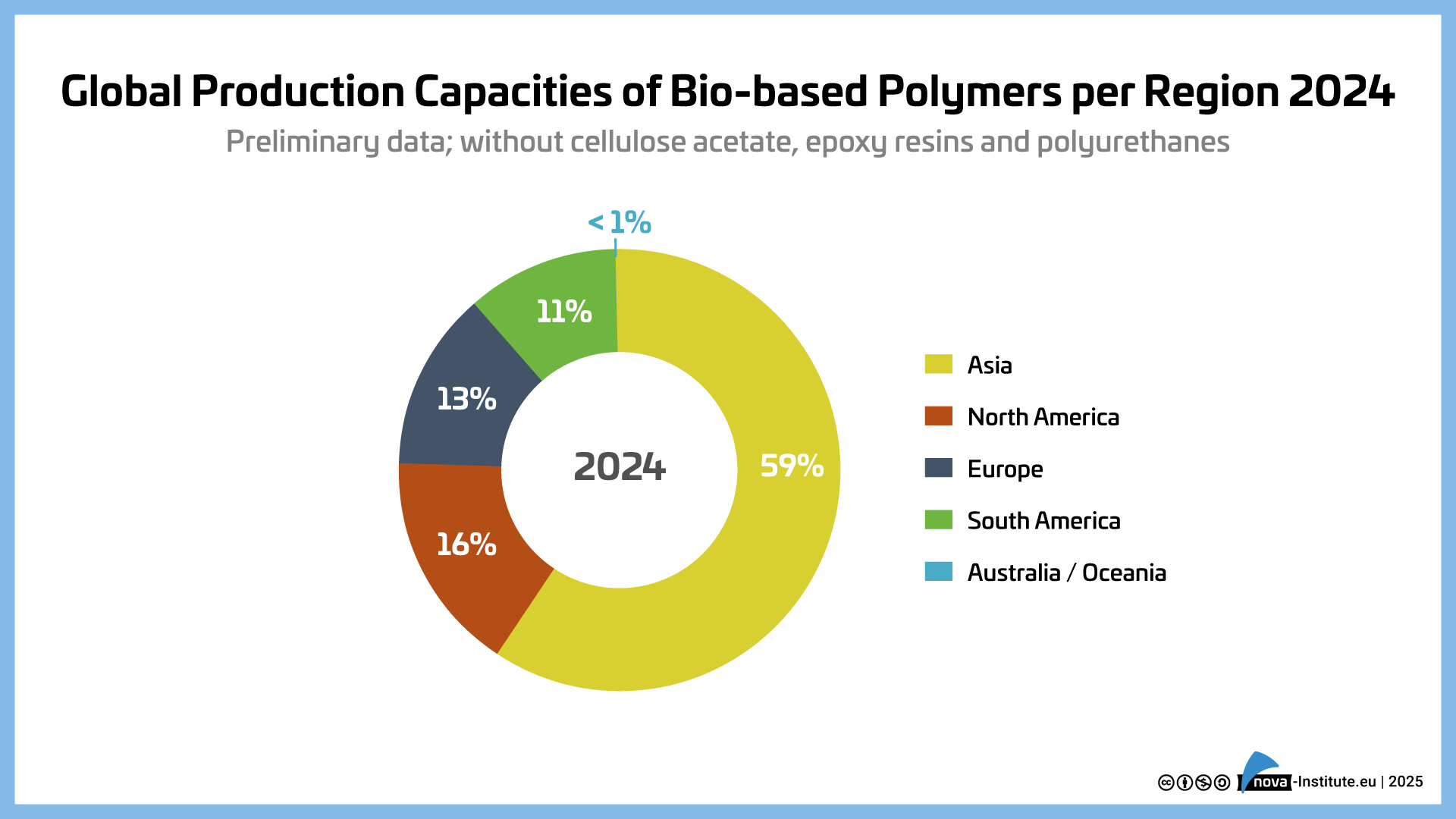
Expert insight into capacity developments, investments, and new policy frameworks Author: Michael Carus, Founder and CEO nova-Institute (Germany) As the New Year begins, let’s take a closer look at the current state of bio-based polymers. We look at the rapidly growing production capacity, the major investments currently underway in China, Europe, and the Middle East, and the new political conditions in Europe that are driving demand for biodegradable polymers. But first things first… The global capacity for bio-based polymers will grow strongly over the next five years, much faster than for fossil-based polymers. For the fourteen (14) bio-based polymers presented…
-
Protected: Global bioplastics update at EBC24
There is no excerpt because this is a protected post.
-

Protected: Coverage of the AFCC 2024
There is no excerpt because this is a protected post.
-
EU Bioeconomy 2013 Turnover Report
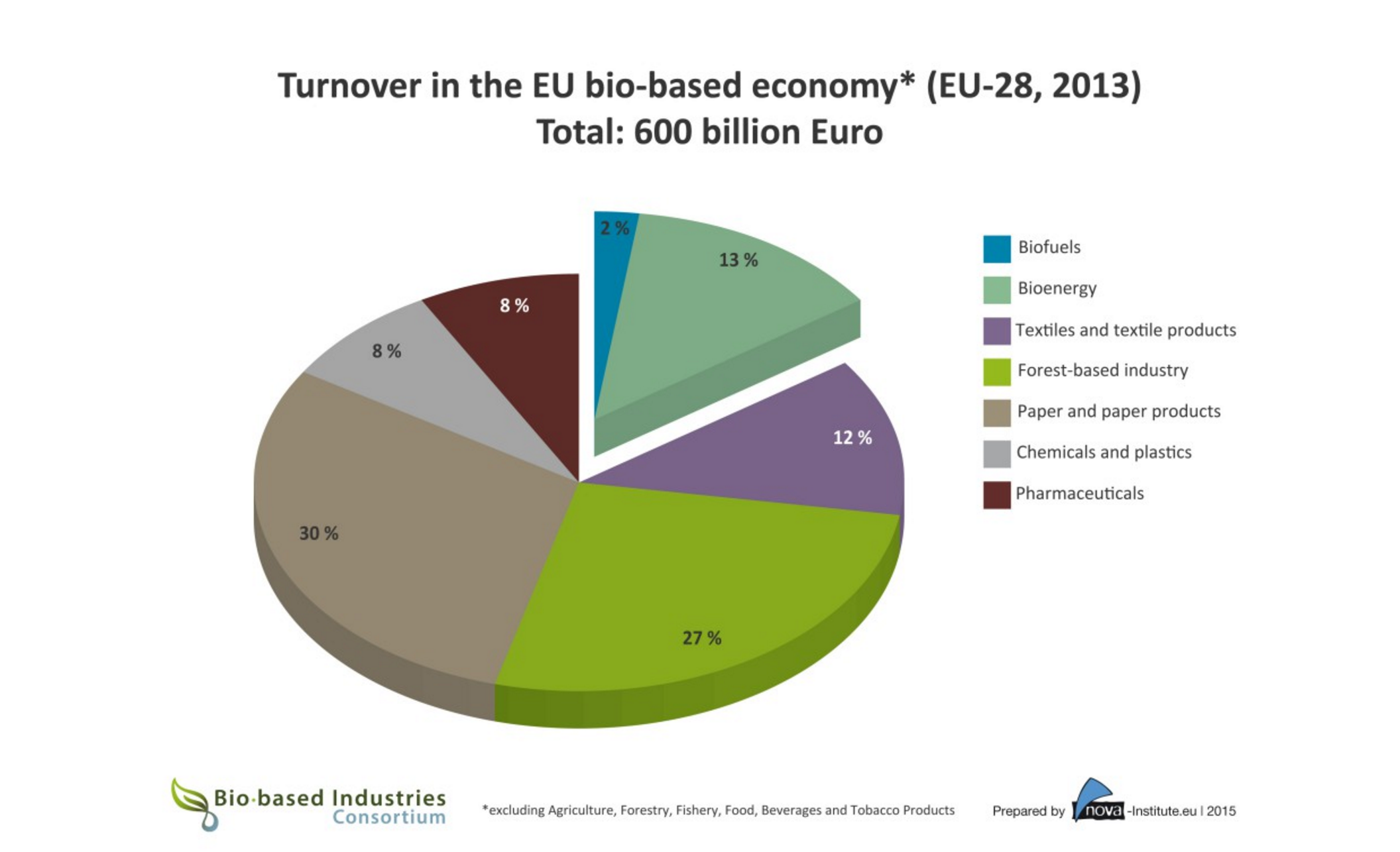
Here is an interesting recent report published by Nova Institute on behalf of the Bio-based Industries Consortium (BIC). According to the report below, 2013 sales from the European Bioeconomy (meaning parts of the economy that use renewable biological resources from land and sea to produce food, materials and energy) had a total of EUR 2.1 trillion. However, this includes food and beverages (50%), agriculture and forestry sectors (21%), and the rest are from the so-called bio-based industries (chemicals and plastics, pharmaceuticals, paper and paper products, forest-based industries, textile sector, biofuels and bioenergy). If focusing only on this bio-based industries, the total…
-

Soybean news: A new biorefinery and new products
The Minnesota Soybean Processors (MnSP) has invested in Ontario, Canada-based Altranex Corporation and entered a license and marketing agreement for renewable lubricant base oils, waxes, diesel and other products using soybean oil as feedstock. The biorefinery will use Altranex’s patented electrolysis process. Altranex is currently building a pilot biorefinery in Ontario that will produce 1 ton/day of Altra-BASE (lubricant base oil) and ALtra-DZL (renewable diesel). The pilot facility twill demonstrate the scale-up of the Altranex’s bench demonstration. Engineering and construction of the pilot plant is expected to begin in early 2017, with a start-up by Fall 2017. The pilot in Ontario…
-
Protected: February Bio-Materials Newsletter Summary
There is no excerpt because this is a protected post.
-

Corbion to form 2nd Gen PLA consortium
I am seeing a lot of consortiums being formed these days and I think that’s a great thing in the renewable chemicals sector. Corbion is inviting users of PLA to join a consortium to accelerate the market introduction of PLA bioplastic resin from second generation feedstock. Second generation feedstocks are those which are not suitable for human consumption, and include plant-based materials like bagasse, corn stover, wheat straw and wood chips. Goals Primary goal is to connect parties throughout the value chain to promote the commercialization of PLA bioplastics made from second generation feedstocks. Secondary goal is to investigate second…
-
From Upstream to Downstream, the importance of the Value Chain
Plant Based Summit shows optimism surrounding the commercialisation of renewable chemicals In the midst of a $50-per-barrel crude oil price environment, companies who participated in the Plant Based Summit held in Lille, France, in April, showed optimism that there will be an increase in the development of green chemistry and in the commercialisation of renewable chemicals, especially in Europe, where the bioeconomy is now a buzzword when implementing government policies and funding. The importance of partnership within the supply chain, from upstream to downstream, has been emphasised as a key ingredient to success. Italian bioplastic company, Novamont, noted its partnership…
-
Protected: Agriculture Reports: Biomass, Sugar and Ethanol
There is no excerpt because this is a protected post.
-
Protected: Analysis: The current levulinic acid landscape
There is no excerpt because this is a protected post.
-

Maleic Anhydride Value Chain – World Market Overview
Tecnon OrbiChem is sharing this presentation on Maleic Anhdyride Market Overview for free. Why am I posting this on the blog? Because petro-based succinic acid is produced using maleic anhydride, and succinic acid’s chemical structure is similar to maleic anhdyride, so it could compete on applications where maleic anhydride is used. Ergo, if you’re in the bio-based succinic acid market or planning to be in one, you have to know the maleic anhydride market. You’re welcome.
-

Comet Biorefining to build cellulosic sugar plant
More press releases coming out the past few days and I’m happy as a clam (I actually have no idea how you can determine if a clam is happy or not). Anyway, Comet Biorefining recently announced that it will build its first commercial biomass sugar plant in Sarnia, Ontario, Canada, with a capacity of 60 million pounds per year (~27 ktpa) producing high-purity dextrose sugars from locally-sourced corn stover and wheat straw. The new plant will come online in 2018. The company said its dextrose will be cost-competitive and will be the same as any high-purity dextrose that are being…
-

Segetis out?
So has Segetis officially folded? I heard from a very good “DSM Source” that Italian levulinic acid producer, GFBiochemicals, has acquired Segetis’ IP and assets. By the way, DSM is one of Segetis’ investors, and double by the way, GFBiochemicals executives are mostly ex-DSM. It is expected that GFBiochemicals will officially release a statement tomorrow. I also looked at some of the management of Segetis on LinkedIn, and yes, our good friend Cora Leibig (Chief Operating Officer), is not anymore with Segetis since October 2015 as well as Chief Scientific Officer, Brian Mullen, also since October 2015. It makes sense…

GreenDMA Portal
The GreenDMA Portal is your one stop source for valuable, timely and accurate data covering renewable chemicals and polymers capacity, market share, product market indicators, chemical profiles and industry news with accompanying analysis. Please check out the video above highlighting the benefits of the GreenDMA Portal.