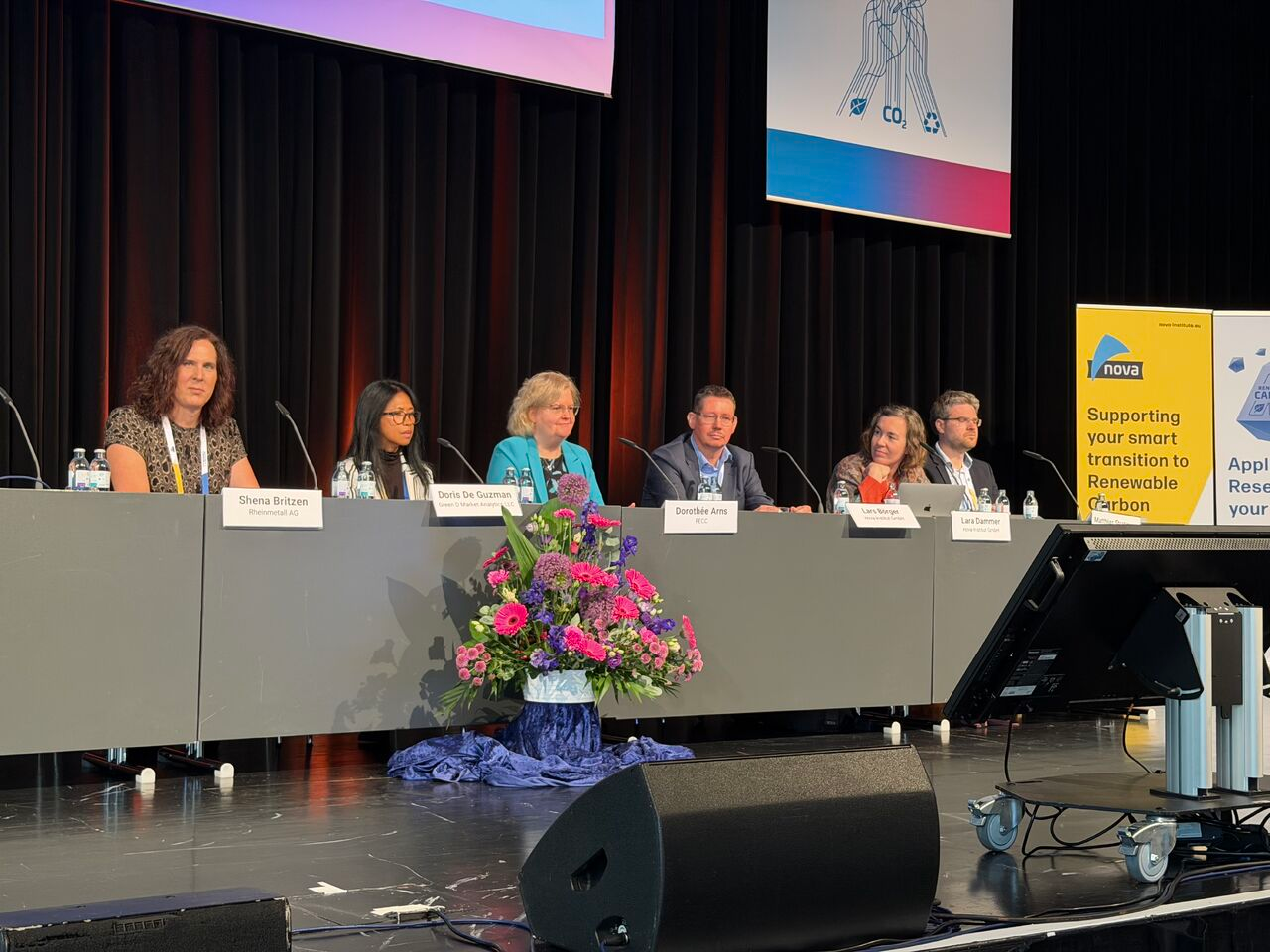
After several days of presentations and discussions at the Renewable Materials Conference (#2026RMC) held in Siegburg, Germany, the renewable materials industry does not appear to be short of technologies. What it remains short of is a reliable system for turning those technologies into competitive, financeable and scalable businesses.
Across biopolymers, renewable chemicals, lignin, furanics, CO₂ utilization, surfactants and advanced recycling, many technologies are moving well beyond proof-of-concept. Yet commercial success increasingly depends on something more difficult: matching performance, cost, existing infrastructure, feedstock availability, customer commitments and policy support at the same time. That challenge is becoming even harder amid global oversupply, margin pressure and geopolitical uncertainty—a combination described during the conference as a “transformation paradox,” where the strategic need to transform is increasing while the financial capacity to invest is being squeezed.
B4Plastics proposed its “Swap or Scrap” model for converting underutilized European polymer assets to novel biopolymers rather than building entirely new plants. B4Plastics estimated that some existing assets could potentially be converted for less than €10 million compared with roughly €500 million for a new facility, illustrating why repurposing existing chemical infrastructure may become as important as developing new molecules.
Another theme is the growing emphasis on performance rather than renewable content alone. PolyScout/TNO showed how polymer-specific AI could shorten materials-development cycles by linking molecular structure with physical validation. Fraunhofer stressed that limited monoterpene availability makes commodity-scale substitution unrealistic, reinforcing the need to target applications where differentiated performance supports higher value. Lignin developers such as Bloom, VITO and VTT are moving beyond the proposition that lignin is simply a renewable aromatic feedstock: color, molecular-weight control, carbon efficiency, solubility and application-specific performance are becoming the real commercial metrics. Viridi — named Renewable Material of the Year at the conference —presented a CO₂ copolymerization catalyst designed to work at below 10 bar and substantially lower temperatures, potentially allowing captured CO₂ to be incorporated into surfactants and other products using existing industrial equipment.
Several discussions returned to global chemical overcapacity—particularly the impact of new capacity from China—and the resulting pressure on utilization rates, prices and margins. For European producers, the challenge is compounded by energy costs, regulatory burden and aging or underutilized assets. This makes the current investment environment unusually difficult. Companies are being asked to finance new feedstocks, processes and supply chains precisely when incumbent chemical assets are struggling to earn adequate returns.
The financing discussion made the same point from another direction. Banks need contracted cash flows, feedstock security, long-term offtake and manageable technology risk before first-of-a-kind plants become bankable. Sustainability credentials do not change that risk equation. Contracts for Difference, technology guarantees and other mechanisms were discussed as ways to reduce the revenue and technology risks that prevent first-of-a-kind renewable material projects from securing financing.
Perhaps the most consequential discussion at #2026RMC is who creates the demand?
Policymakers and industry representatives discussed Product Carbon Footprint targets, minimum sustainable carbon requirements, mass balance, green procurement, EPR mechanisms, levies/certificates and other approaches for spreading the green premium across the value chain. The emerging direction is toward combinations of horizontal measures supporting basic chemical investments and more targeted measures for markets such as packaging, textiles, automotive, construction, coatings and personal care. At the same time, inconsistent carbon accounting methodologies remain a serious concern. If renewable chemicals, fuels and materials using similar feedstocks are treated differently by regulatory systems, capital will naturally migrate toward the pathway offering the clearest economic return.
The next phase for renewable chemicals and materials commercialization will favor technologies that combine differentiated performance with existing assets, lower capital intensity, credible feedstock economics and identifiable market pull. Drop-in renewable carbon can provide speed and scale; novel molecules can provide functionality that incumbents cannot. AI can shorten development cycles and policy can reduce demand uncertainty—but none of these works particularly well in isolation.
As Europe confronts idle chemical capacity alongside a strong renewable materials innovation pipeline, could repurposing existing assets become one of the fastest routes from innovation to industrial scale?
Green D Market Analytics can provide a specialized report highlighting the market for bio-based chemical intermediates and monomers. We provide our clients with confidential reports on the current industry landscape, including new and planned projects. Please contact us at info@greendma.com for more information about our customized client services, detailed market data, and special reports.
The GreenDMA Portal is unique in its ability to provide current data on the renewable chemicals market, including Capacity, Product Profiles, Market Players, Market Share, New Investments, New Plants, Critical Industry News, and analyses. Find out more at greendma.com/portal.


Leave a Reply